.svg)
Last modified:
In addition to the blue’Log XM/XC from meteocontrol, you can add data loggers from many different manufacturers. Alternatively, you can import data via manufacturer APIs or predefined imports.
General instructions: Set up a data source (data logger, etc.)
For your devices to communicate with VCOM, you need to set up the data sources in the system settings. A data source can be a bluelog Neo or blue’Log XM/XC data logger or any other product listed in the VCOM import compatibility list. See Import data into VCOM for instructions on specific devices and manufacturers.
Prerequisites
-
The data source must be compatible with VCOM. See the VCOM import compatibility list.
-
If the data source is not directly compatible, you can set up a generic CSV import. See Set up a generic CSV import instead of a data logger.
-
The data source must be online.
General tips
-
Have the data source (data logger, etc.) serial number on hand. When entering the serial number, pay attention to uppercase and lowercase letters and empty spaces.
-
The data source name can be freely selected. For recommendations, see our Naming guideline.
-
If possible, use data sources that support the same Measuring interval or align the intervals. Otherwise minor features may not work properly.
-
We strongly recommend ticking the check box Automatic device creation to ensure that VCOM automatically creates any new devices found during each data import.
-
If possible, perform a connection test once you have completed the configuration in both VCOM and the data source.
Data loggers only
-
For data loggers, update the firmware to the latest version prior to configuration.
-
For data loggers, any import that uses FTP can also use SFTP. The access data, such as the FTP server address, user name, and password remain identical. Only the port changes from port 21 (FTP) to port 2222 (SFTP).
APIs only
-
If you experience import issues with the API, please contact the respective API provider first.
-
Each day at midnight, VCOM checks for complete data and requests data from the past 7 days. If there are no limitations from the API and the data is available, the gaps will be filled.
Steps
-
At system level , go to


-
Under New source of the type, select the data source from the dropdown and select Add.
-
Fill in all empty fields.
-
Please note that the information required for each manufacturer will vary, but may include a device name, serial number, measuring interval, API, or FTP information. See also Import configuration for selected data sources.
-
The Measuring interval must be the same as that of your local data logger. The Measuring interval (aggregated) only applies to bluelog Neo and blue’Log XM/XC.
-
-
Select Register new data logger.
-
Verify that the data source is communicating with the meteocontrol server. See Verify data transmission to the meteocontrol server.
Verify data transmission to the meteocontrol server
There are different ways to verify whether your data source is transmitting data to VCOM:
-
At system level , add the Data logger overview portlet from the

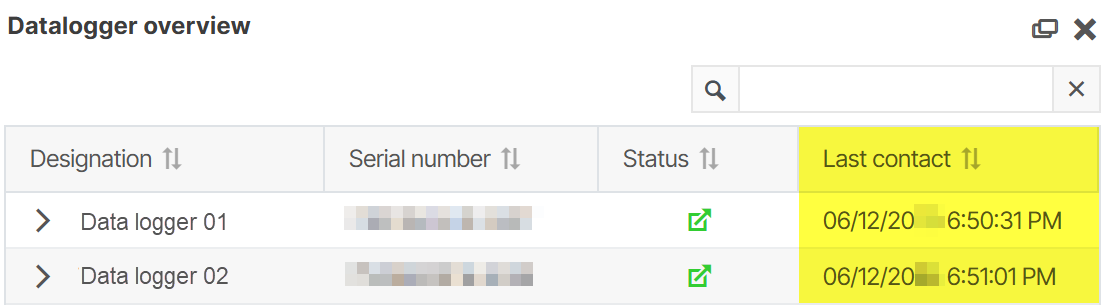
Check VCOM’s last contact with the data logger in the Data logger overview portlet
-
At system level , go to

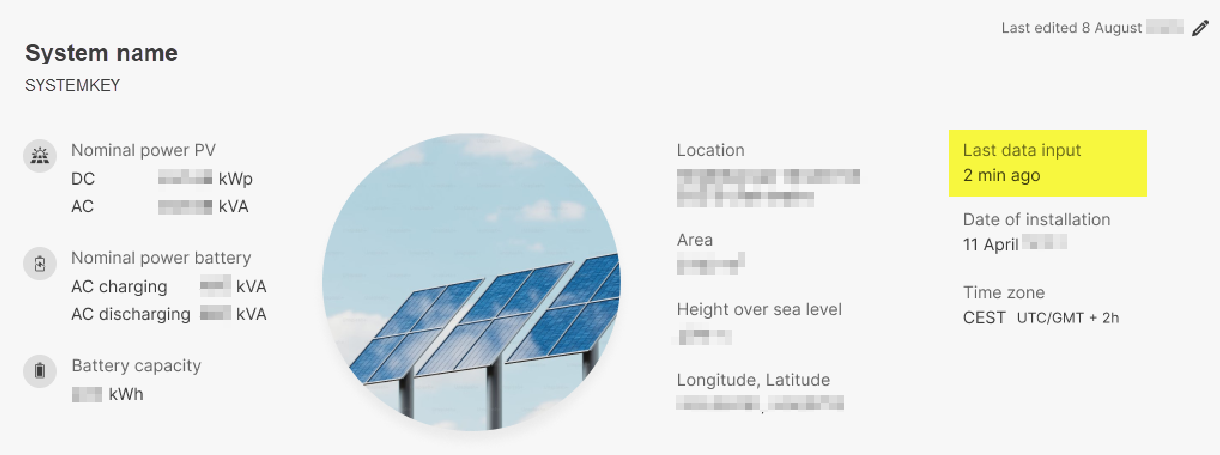
Check VCOM’s last data input in the Technical data overview
-
At system level , select the
.png?cb=58ba28d3437c23800627982fbca42824)
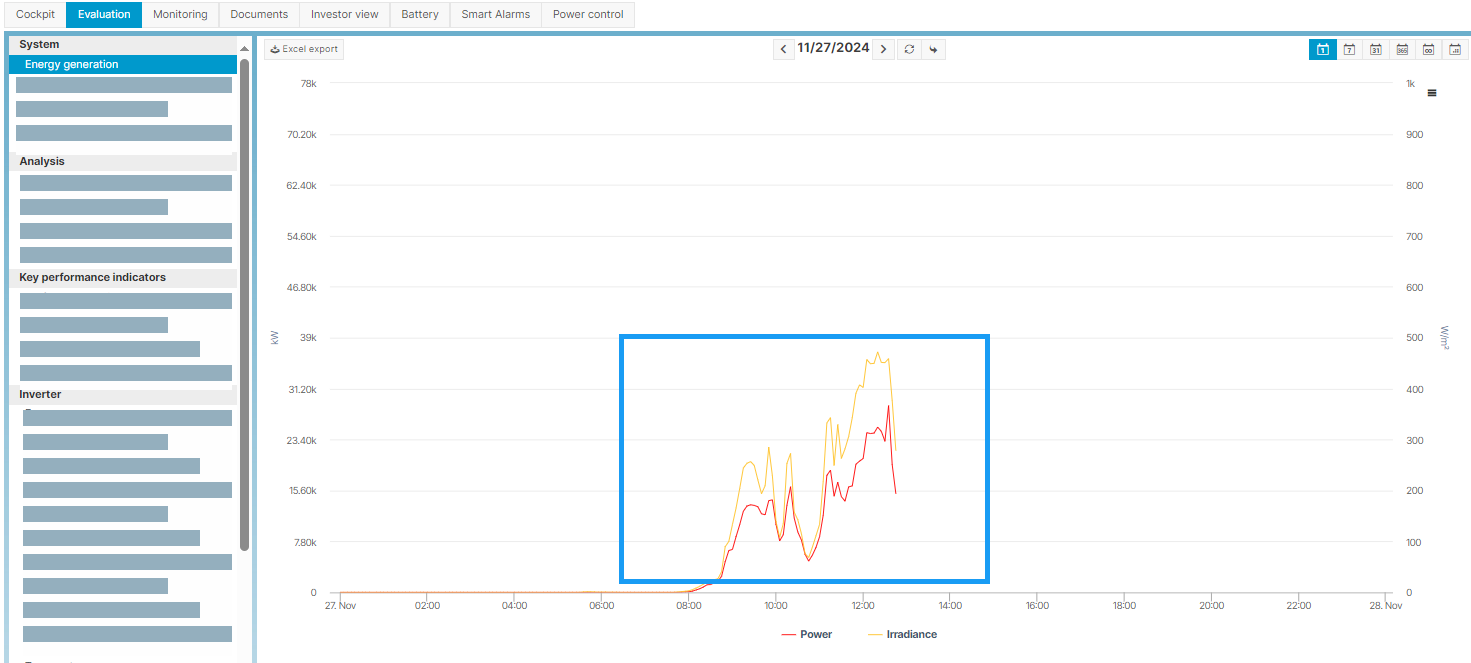
Confirm whether energy is being generated in the Energy generation chart
-
At portfolio level , go to
.png?cb=12102cf9ad8b8bc5c973d4c89009819a)

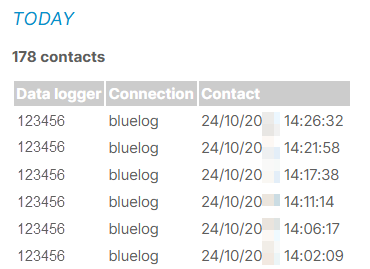
Check the latest server contacts
Note
Please contact our Support team if there is a transmission problem.