.svg)
Last modified:
In the portal, systems can represent either real physical installations or virtual constructs that let you combine or divide physical installations.
Physical system
A physical system represents an actual photovoltaic installation that exists in the real world. It includes real hardware – such as inverters, meters, modules, and sensors – and displays live operational data collected directly from the site.
Virtual system
A virtual system is a digital representation created for organizational or analytical purposes. It does not correspond to a physical installation. Instead, it combines data from multiple physical systems or divides a large installation into smaller logical units that you can monitor individually.
Creating and monitoring virtual systems does not incur any additional costs.
Single licenses only If the source system is billed with a single license and this license expires, its data also disappears from any virtual system. There is no warning about upcoming license expiration dates within virtual systems.
Divide physical system
-
Divide all or some parts of a physical source system into individually monitored virtual systems.
Use case
-
You can view the data of specific parts of a large system individually.
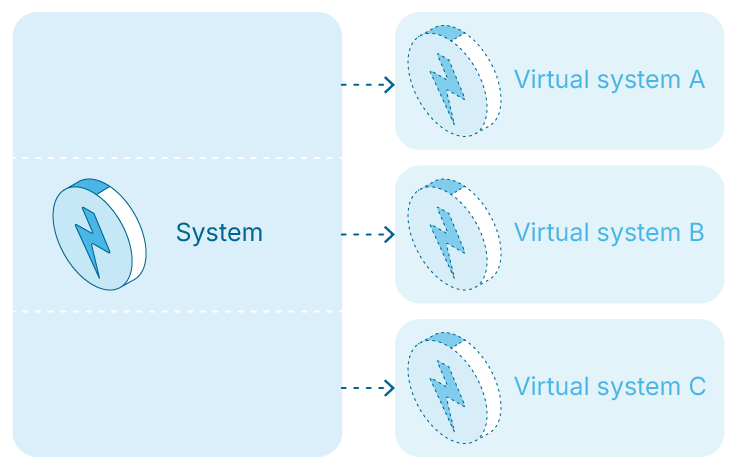
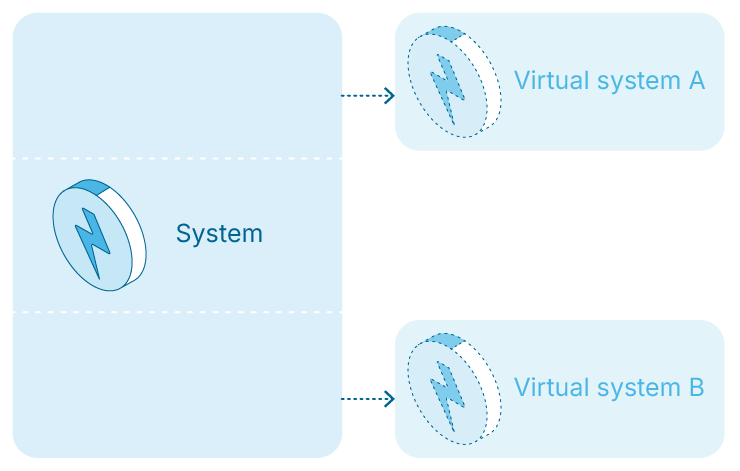
Combine physical systems
-
Combine several physical source systems into one virtual system without consolidating all their data loggers.
Use cases
-
You can view multiple systems simultaneously and map the specific energy.
-
Because of multiple PPCs on your site, you had to set up individual systems for each. With virtual systems, you can combine them all and, for example, view the overall PR for the entire system.
-
You can create better overviews for investors.
-
Because of multiple WEB’logs on your site, you had to set up individual systems for each. With virtual systems, you can combine them and get an overview of your entire system.
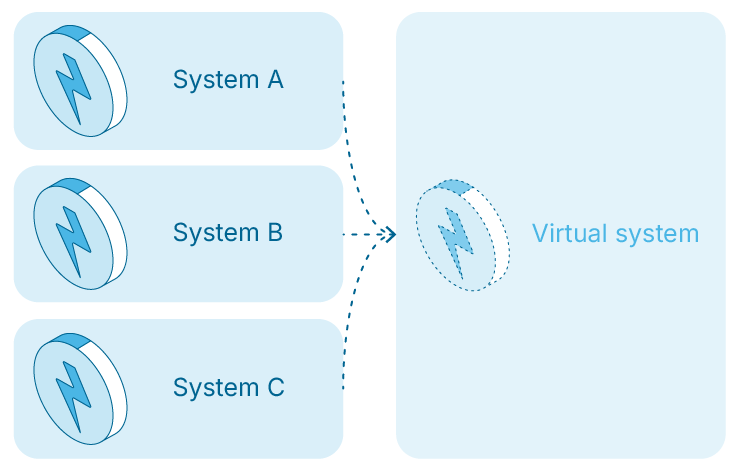
Functional scope of a virtual system
-
Inverter data is the only data directly connected to the virtual system and can therefore be monitored without additional term creation.
-
All other data must be calculated by creating individual Terms for the virtual system in order to be monitored or used for KPI calculations. The functional scope of these new terms depends on the available data points and already defined terms in the source system(s). See Data point assignments.
-
Virtual systems do not support Smart alarms. All alarms occur only in the source system(s).